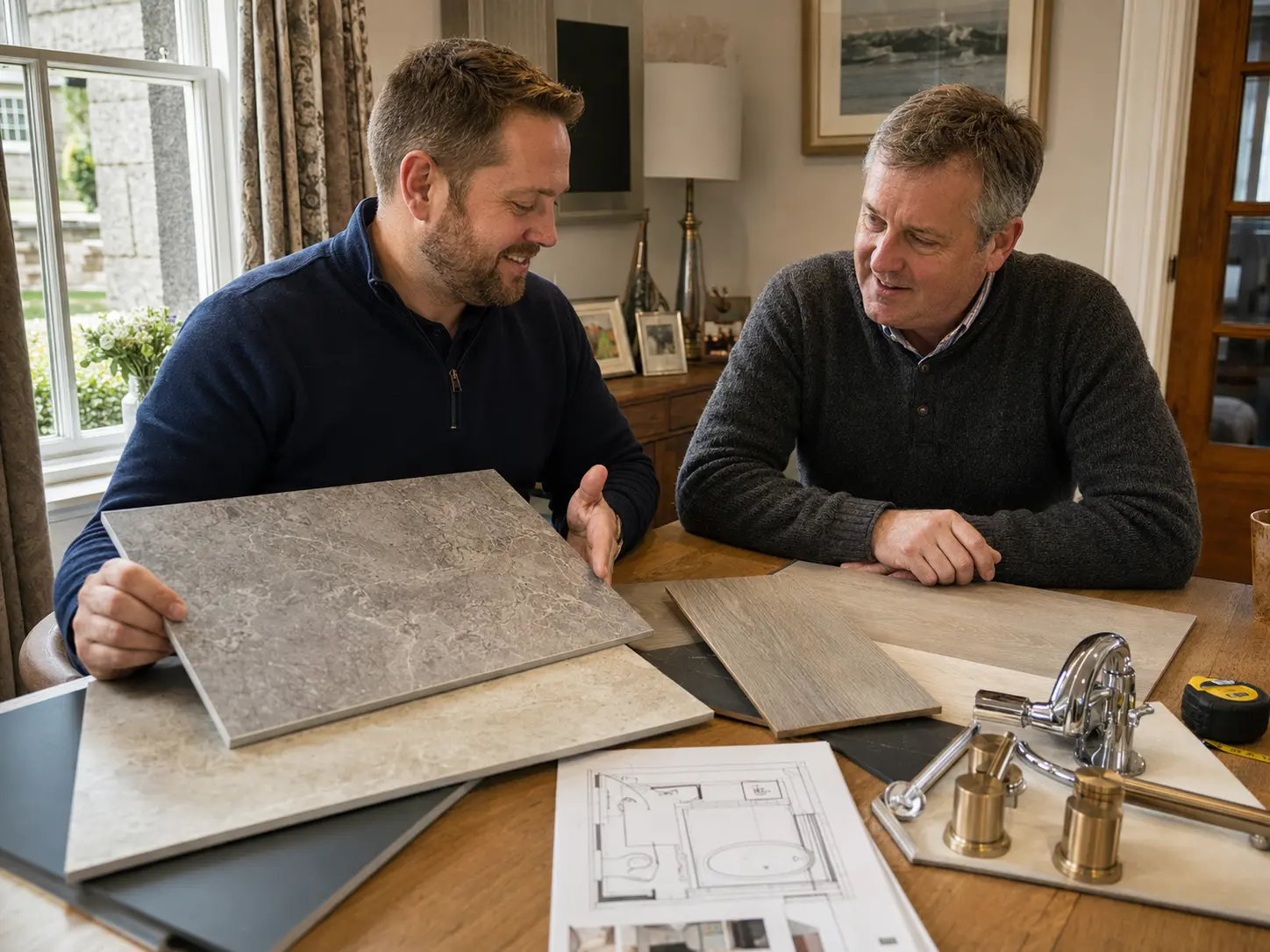
You do not need a finished design before the appointment. A little preparation helps the designer understand your priorities and use the visit well.
You do not need a finished design
A home appointment is a chance to work out what suits your bathroom. You do not need to choose every fitting beforehand or produce a detailed drawing. It is more useful to explain what you want to change, what you like about the current room and which parts make everyday use difficult.
Walk through a normal morning and note the problems. Perhaps two people cannot reach the basin comfortably, the shower door catches the toilet or towels have nowhere to hang. These examples help the designer understand the room's job. A photograph you like can then guide its appearance without becoming a layout that must be copied exactly.
Decide who uses the room and how
Explain whether the bathroom is shared by the whole household, used mainly by one person or attached to a bedroom. Tell us whether a bath is used regularly and whether shower access is comfortable. If reach, grip or standing space is a concern, mention it before products are suggested so the plan can address the actual need.
Think about storage as part of this conversation. List the items used daily and the spares kept in the room. A vanity that looks large outside may hold less than expected once pipes are allowed for. Knowing what needs a place helps us compare cupboards, drawers, mirror cabinets and shower shelves sensibly.
Bring a small set of useful pictures
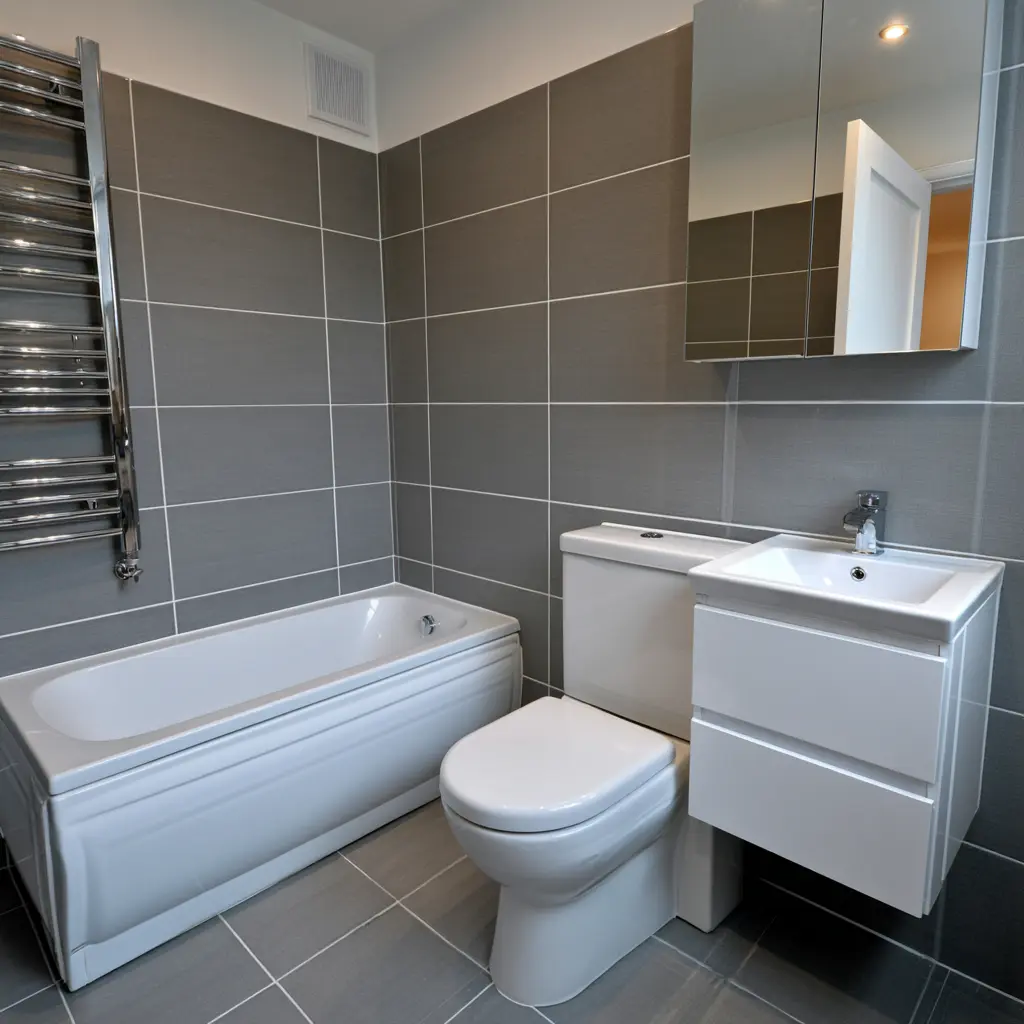
Choose a few examples and explain the detail you like in each. It might be a colour, a fitted bath, a particular vanity or a shower screen. Save pictures that show similar-sized rooms where possible. A vast showroom bathroom may suggest finishes you enjoy while offering a layout that cannot work in your home.
Include pictures of things you dislike too if they explain your preferences clearly. You may want fewer grout lines, a plainer cabinet or less dark flooring. There is no need to follow one style label rigidly. The appointment should help turn those preferences into a combination of fittings and finishes that works together.
Make the room easy to measure
Clear loose items from the floor and the main surfaces where practical. The designer needs to see doors, windows, fittings and accessible pipe positions. Do not move heavy fittings or open unsafe areas to prepare. Explain anything that cannot be reached so the next inspection step can be planned appropriately.
A few photographs of awkward corners or an earlier repair may help. Tell us about known leaks, loose flooring, ventilation problems or changing shower temperature. The appointment is not improved by hiding a fault behind a tidy surface. Existing problems can affect the work and should be discussed before new finishes are chosen.
Explain access and timing
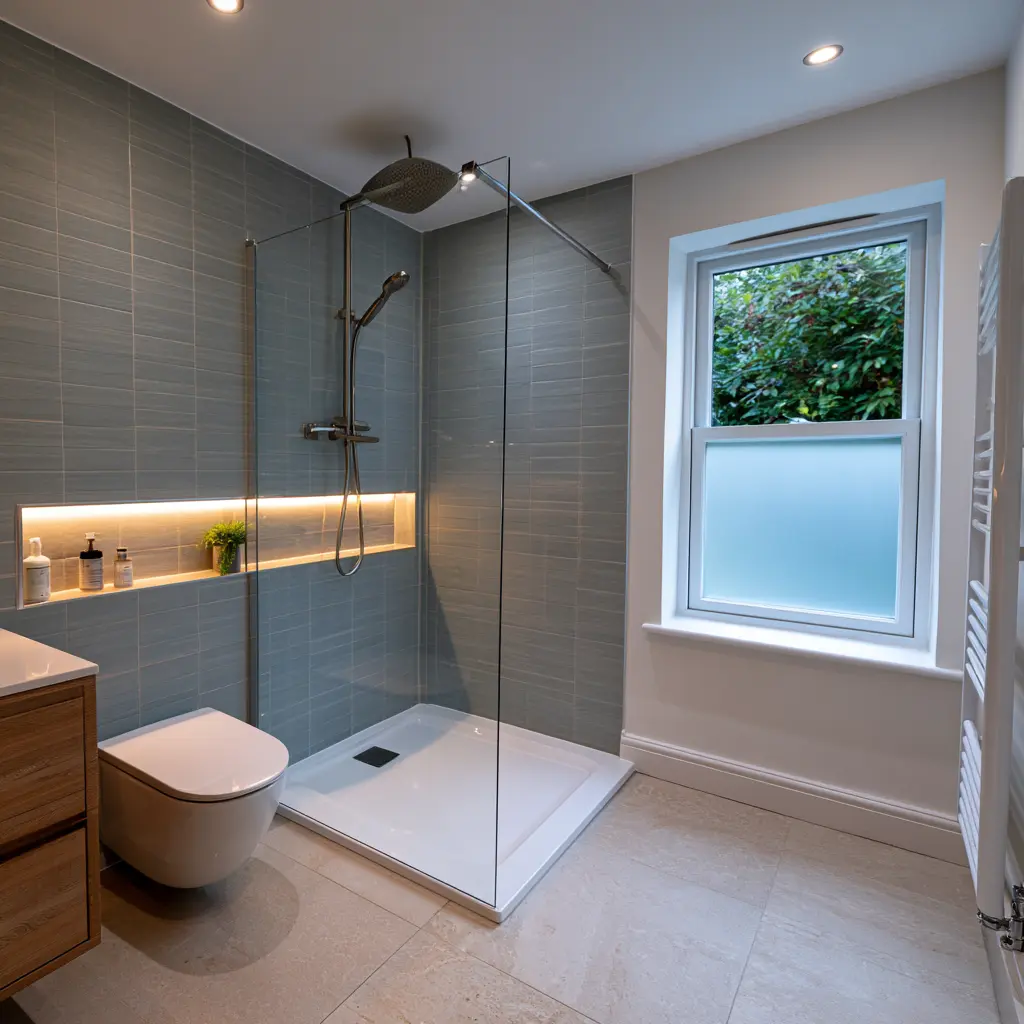
Mention stairs, parking, shared entrances and any restrictions on deliveries or working access. A bath or large wall panel needs a workable route into the room. Tell us whether this is the only bathroom and whether a household event affects your preferred dates. These details help with a practical fitting plan.
An appointment request is not the same as an agreed installation date. Confirm the next steps and when product choices need to be settled. If permissions or further checks are needed for the proposed work, allow for them before removal begins. A clear sequence is more useful than an early date based on incomplete information.
Know what to review afterwards
Keep the proposed layout, product list and quote together. Check that the main problems you described have been addressed and that storage, door openings and shower entry remain comfortable. Review the exclusions and ask how hidden damage or unavailable products would be handled. You should understand what is included before agreeing the work.
Our home design appointments cover measurements, layouts and finish choices in the room where the bathroom will be fitted. To arrange one, send your postcode and a short description of what you want to change. Bring your priorities and questions; the purpose of the visit is to help you make the remaining choices with a clearer view of the room.
For help with your bathroom, see our home design appointments page. Related guide: Bathroom Renovation Planning Checklist
Every room is different. A measured home appointment is the best way to turn general advice into a design and quote for your room.
Book your home appointment